Have you heard about Government of Canada’s New COVID-19 Benefits

Many Canadian workers have missed work and pay due to COVID-19 can now apply for three new benefits from the Canadian Government. 

Families and individuals who are facing financial difficulty can now get support through the following benefits that are available through Canada Revenue Agency (CRA):

  • Canada Recovery Sickness Benefit (CRSB) 
  • Canada Recovery Caregiving Benefit (CRCB).
  • Canada Recovery Benefit (CRB)

Applications for CRSB, CRCB, and CRB applications are now open.

Canada Recovery Sickness Benefit (CRSB)

Workers who are sick or must self-isolate for COVID-19-related reasons, or have underlying conditions that make them more susceptible to COVID-19 can apply for CRSB.

If you are eligible for the CRSB, you can receive $500 ($450 after taxes withheld) for each 1-week period. Check your eligibility here – https://www.canada.ca/en/revenue-agency/services/benefits/recovery-sickness-benefit/crsb-who-apply.html

Canada Recovery Caregiver Benefit (CRCB)

Caregivers who need to care for a child(ren) under 12 years old who is affected by the illness or if their school, regular program, or facility is closed or unavailable due to COVID-19 is eligible for CRB. This also applies to other family members requiring supervised care, who cannot attend regular care facilities because of COVID-19, can apply for CRSB.

If you’re eligible for the CRCB, your household can receive $500 ($450 after taxes withheld) for each 1-week period. Check eligibility here Read more here https://www.canada.ca/en/revenue-agency/services/benefits/recovery-caregiving-benefit.html

Canada Recovery Benefit (CRB)

There is also assistance for self-employed workers who are not eligible for Employment Insurance (EI) and still require income support. These workers must be available and looking for work and accept work when it is reasonable to do so.

If you are eligible for the CRB, you can receive $1,000 ($900 after taxes withheld) for a 2-week period. Check eligibility here https://www.canada.ca/en/revenue-agency/services/benefits/recovery-benefit.html

Canadians can apply for these benefits online through CRA’s My Account or call 1-800-959-8281.

Continue reading “Have you heard about Government of Canada’s New COVID-19 Benefits”

How to Prepare for the end of Debt Holiday

The pandemic made it tough for thousands of Canadians to keep up with their bills, especially the high-interest consumer debt. A debt holiday was put in place on consumer debt and mortgages helping Canadians handle the daily cost of living without worrying about excessive debts.

Now that the country and even the world are coming back together and things are opening up, the debt holiday is nearing its ends. This means many bills will be due again – but how do you prepare for such a change in your finances?

Check out the tips below.

Negotiate a Payment Plan

Before your deferment plans end, contact your creditors. Don’t wait until the plan expires and then try to work something out. At that point it’s too late, your payments will be due and if you don’t pay them, it will hurt your credit.

Call your creditors long before it ends and ask about your options. Let them know your financial situation, whether you’re furloughed, not working, or working but trying to catch up. Most creditors will work with you, helping you figure out an affordable plan. Creditors would rather make a plan and receive the full payment than put you at risk of defaulting altogether.

Continue reading “How to Prepare for the end of Debt Holiday”

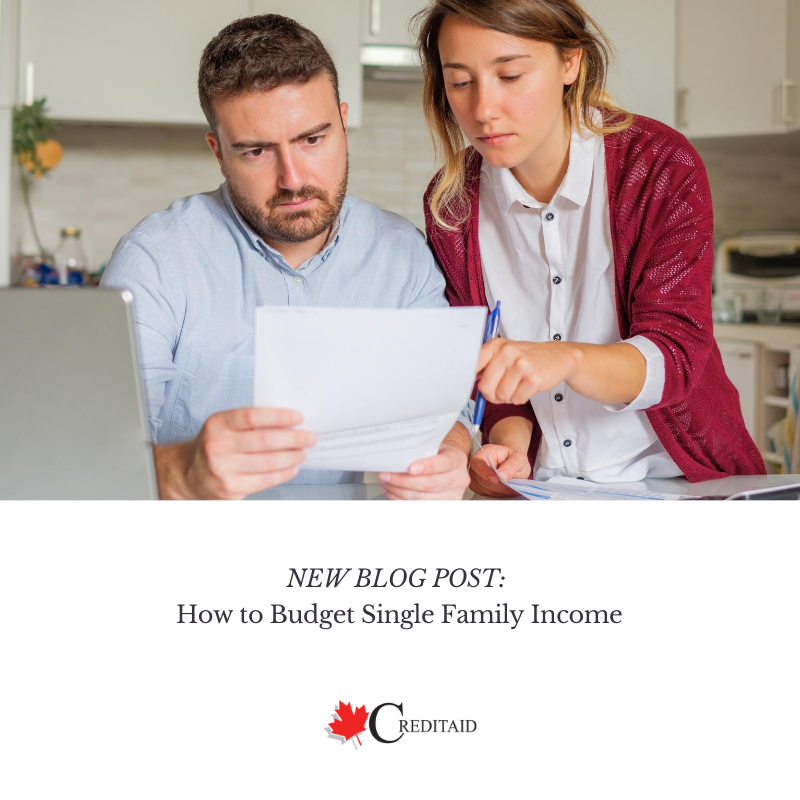
How to Budget Single Family Income

Has the pandemic brought your family down to a single income? With more than a million jobs lost in Canada, many families are in the same boat. Whether you were laid off or were required to stay home with your children who couldn’t go to school or daycare, it’s important to know how to budget your single family income.
 
Even if you collect unemployment, for now, it may not last. Just in case, consider the following ways to budget your single family income.
 
Make Cuts
 
It’s not a pleasant thought, but you must cut expenses. Get creative here. For example, if you cut cable, can you afford to replace it with a streaming service? Netflix, for example, costs a fraction of standard cable services. See if you can work it into your budget so you don’t feel like you’re sacrificing too much.
 
Think of other places you can cut, such as:
 
·       Eating out
·       Entertainment
·       Grocery store (shop sales and clip coupons)
·       Household goods (shop sales or comparison shop online)
 
Redo your Budget
 
Take an honest look at your budget. Where do you spend? If you can’t cut in certain categories, where does that leave you each month?
 
Think about saving for an emergency fund and retirement. Both should remain line items on your budget even when you’ve gone down to one income.
 

Continue reading “How to Budget Single Family Income”

Stores are Open – Reign in your Spending

Life is trying to get back to normal. As the COVID-19 numbers drop, more retail stores are reopening, which is a great sign for our economy, but may not be as good for your pocketbook. Try to avoid getting caught up in the excitement of things getting back to ‘normal,’ and be mindful of your spending.

Before you shop, ask yourself the following questions.

Is this an Impulse Buy?

Are you shopping with a list? If you are, is the item you’re holding or that you ‘need to buy’ on your list? If not, it’s an impulse buy. Even if you don’t have a list, but you look at things you don’t need or didn’t intend to buy; it’s an impulse buy.

Rather than buying without thinking, give yourself 48 hours. Leave the store or close your web browser without buying the product. After 48 hours, if you’re still thinking about the item, maybe it’s something worth buying. Chances are though, if it was an impulse buy, you won’t even think about it again.

Continue reading “Stores are Open – Reign in your Spending”

Honoured to Support St. Amant

Longtime readers of our blog will undoubtedly recall our work with the St. Amant Centre.

We are incredibly honoured to work with the dedicated members of the  St. Amant and Winnipeg communities who have come together over the years to lend their support to this extremely worthy cause, which acts as a resource for Manitobans with developmental disabilities and autism.

On September 27th, Creditaid teamed with a number of local businesses, including title sponsor National Bank, to present the St. Amant Free the Spirit Festival. Our staff were on hand and ran the bean bag toss for St. Amant residents and the general attending public. Both our crew and the participants had a great time at our booth.

The management of Creditaid would like to take this opportunity to thank its staff and their families for helping out at this event. Together, we raised over $175,000 for the Centre.

Congratulations to everyone – your hard work is showing off and the St. Amant Centre is the beneficiary of your dedication.

New Couples and Money

Couples and Money Management

You’ve just moved in with your current love or maybe you’ve just got engaged. This is a happy, exciting time in your life. The two of you may have discussed how many kids you want, where to go on a honeymoon or where your dream house will be. But have you been truthful with each other with regard to your finances and credit rating? Everything listed above costs money and both of you need to be honest with each other regarding your finances in order to have those things.

I am not suggesting that you open joint bank accounts or sign over your pay check to your spouse. I know many couples that do but I also know many who retain separate banking and finances. Either arrangement is fine as long as you both are happy with it. As you begin a new, permanent relationship, it is time to set your financial goals as a couple and to be honest about your money values.

Here are things you need to discuss now.

  1. What is your net worth? This is a list of your current assets and liabilities. An asset is an item that you could sell and receive money for.  For most of us this means real estate, cash in our bank accounts, RRSP’s and vehicles. Liabilities are your debts.  Ideally your assets should be higher than your liabilities. If so, you have a positive net worth. As you get older your net worth should increase.  How do each of your net worth statements compare? Are you both in agreement concerning your net worth goals? This is important because your net worth can determine when you will be able to buy that dream home, afford to have children or when you can retire.Do you have a negative net worth because of a student loan? Young people often do.  Student loan debt is considered acceptable if the amount of the debt is in relation to the type of education received. For example, many new doctors and dentists graduate with student loan debt in the $150,000 range. Given the fact that they have the potential for a very high income, this level of debt is reasonable and can be paid off in less than 10 years.
  2. Go online and order a copy of your credit bureau if you have not done so recently. Share it with your partner.  Are your scores and credit patterns similar? Or does one of you buy most things using credit, carry balances each month and pay hundreds of dollars in interest charges? Does the other hate debt (and interest charges) and pay off all their credit cards each month?  If you each have very different credit habits and attitudes toward debt, there could be a real problem in the future. If one spouse has a poor credit history, it could prevent the other from reaching financial goals as a couple, like buying a house.  Spouse A, with the minimal debt and excellent credit history could help Spouse B increase their credit score by co-signing a consolidation loan so that high interest credit cards can be paid off and cancelled. If every loan payment is made on time, Spouse B’s credit score will improve. This in turn will benefit both spouses by way of a lower interest rate if they make a joint purchase like a house or car.
  3. How are you going to manage your day to day expenses? Some couples close their individual accounts and open a joint bank account. All their money gets deposited and withdrawn by either person from this bank account. It sounds like the most convenient way to handle expenses but it can cause big problems. Who is depositing the money and who is withdrawing the money? And for what reason? This strategy works the best for couples who both manage their money well. So before you decide how you are going to handle your banking, it would be wise to write up a monthly budget then decide who will be responsible for paying for what. Some couples maintain separate banking for their entire relationship. Each is responsible for paying some of the joint bills. For example, the wife pays for the groceries and the husband pays the rent. Some couples use a hybrid of both methods in which each maintain a separate bank account and pay their own individual expenses but both deposit a set amount to a joint bank account and joint expenses are paid from it. But how much should each contribute to the joint bank account? Some couples each deposit the same amount of money, for example, $2000 per month. Other couples each contribute a percentage of their income. Once you have come to an agreement, talk about what will happen if you have kids. What will happen if one spouse’s income is reduced because of maternity leave?
  4. What are your long term goals?This is important to establish early in a relationship because you may discover you have radically different financial goals. If one of you is happy to rent forever and basically spend every dime on travelling or entertainment, but the other spouse wants to save up for a house and early retirement – the relationship is doomed to fail. We all hear that ‘opposites attract’. This may be true for a short period of time. For long term happiness and peace in the household your goals and dreams need to be aligned. You need to be honest with yourself and each other as to what is important to you and where you see yourself financially in 10 or 20 years. If your goals differ, determine if you are both willing to compromise. Staying in a committed relationship is hard work and can be stressful. Having money problems adds even more stress.

Laurie Boudreau is a credit counsellor with Creditaid. Contact her now for help with managing your money and your debt.

What to Do with the Wedding Ring after Your Divorce

When a relationship ends, the items that held special meaning before can become bearers of painful reminders. Engagement and wedding rings, wedding dresses and marriage certificates are items that many people wonder about after the end of their relationship.  What can you do with them?

Engagement rings and wedding rings often come with a big price tag and if the items lose their emotional value, there is the option to sell them.  Jewellers sometimes will buy their pieces back but at a significant discount.  On average, they will buy them back at only 35% of original value.

Many people in similar situations have opted to sell their rings online through websites such as “I Do… Now I Don’t”.  The founder, Joshua Opperman, was left with a ring after his engagement ended prematurely which prompted him to found the jewellery auction site to help others in similar situations part with their rings.  He has since been featured on Rachael Ray, CNN, and Whoopi Goldberg.

One important factor when selling your high valued item online is to minimize risk of scam.  On “I Do…Now I Don’t”, sellers can list their rings for free.  Once the item is purchased, the money is held in escrow by the website.  The seller will send the ring in for authentication by GIA-trained gemologist.  Once the ring has been authenticated, the ring will be sent to the buyer via UPS with insurance included and a bank cheque will be mailed out to the seller.

Sellers will typically receive 40 – 60% of the retail price for their item, minus a 15% commission fee. If you are making payments on the ring, this return can help you substantially in reducing your debt.

Parting with your engagement or wedding ring might give you the emotional detachment you need to help you move forward past the relationship and onto something better! Visit https://www.idonowidont.com/ for more information.

Changes Are-a-Comin’

‘I’ve always wanted something really cool like this to happen!’ That’s what I excitedly exclaimed to my ‘twenty something’ buddy as we prepared for an emergency landing into the Toronto Airport. We were thrilled to be along for the ride. We were young.

We landed without incident, but what youthful carelessness to actually revel in a dangerous moment.

Proverb says: ‘Be careful what you wish for.’ A lot of folks wish for some kind of change – in their marriage, in their jobs, where they live. When separating, or thinking of separating or negotiating the terms of your separation, be careful. Things can change. And this can apply to the parenting plan you and your ex and the negotiator put together.

Try to stay flexible about the future to enable you to address possible changes in circumstances. Two biggies are changing jobs and moving out of province. For example, a couple might have a legal agreement with a Parenting Plan that states he gets the kids each July at the old family cottage, while she gets them all of August in the city. They live in Brandon, Manitoba and he has just been laid off but accepted a new job at lower pay in Estevan, Saskatchewan, three hours away. His new employer won’t give him that same vacation time he enjoyed before so he doesn’t have the freedom of a month at the cottage with the kids next summer. But she has already made plans for that July, having committed to her own kayaking holiday off Vancouver Island. To further complicate things, the Parenting Plan was based on the expectation of a certain level of spousal and child support. She feels undermined by his change of circumstances – she has already pre-paid for the kayaking holiday and part of her ability to afford it was dependent on the spousal support payments. On the other hand, he didn’t willingly lose his job and hoped to replace it with something even better with even more pay.

People can change their minds and their agreement but it does require consensus. A big ‘but’ is ‘But what if one side insists on the existing agreement? What if she pushes for compensation for her outlay of cash for her holiday? And what about the kids and those two summer months? What happens there?’ I don’t have the answer, but an overly rigid plan can be suffocating. The reality is, they need to compromise. It is likely his spousal support and even child support payments will be adjusted downwards to reflect his lower income. Perhaps he can make some contribution to the pre-paid holiday, which she now can’t afford nor has that time free to go. As to what to do about the summer, not sure I’d want to be in the same room when they discuss it, but one way or the other they will figure it out. [I am letting him off the hook too easily, I know; surely he could have discussed this with her and the kids before committing to the new, not so great job out of province. But maybe he was desperate, maybe he had no choice].

Life is full of changes: some too hot, some too cold, some just right. The Goldilocks zone of being just right is where you want to be, but more often than not, like picking your parents, hard to accomplish. Plans emanating from separation and divorce should not be handcuffs, albeit, many feel the obligations for payments, which are just that, financial payments. If they are ‘court ordered’, well, you’re outside the Goldilocks zone, and unfortunately traditional divorce attracts court orders. A mediated divorce can be more flexible while still leaving the party in greatest need with a leveraging stick if need be. I am not advocating delinquency, but if you both start with a cooperative approach you can better handle inevitable changes in circumstance. And often times it’s the one in greatest financial need that requires the flexibility.

Another big change can be re-marriage or ‘re-partnering’ as I have heard it described. One of the divorcing couples entering a new relationship can send ripples, even waves, across what were reasonably calm waters. The kids too can find themselves rising and falling with the waves. One of the things we caution couples in the midst of the process, is to avoid new relationships and if they are already in one, to keep it more or less to themselves. But once the dust has settled, hearts expand and that leads to dancing and …well you get the picture. And why not? Love makes us happy. In fact, when I have a couple going through the process, I can usually tell which of two have someone else already in their life – they usually smile more – and I know that at least one of these folks is, if not really happy, at least sort of happy, and will therefore be a little more focused on getting the work done. I do feel sorry for the lonely one though – dejected, perhaps feeling still in love with their departing spouse, wondering if the pain will ever go away. There really isn’t a plan that can address re-partnering unless it’s tied to spousal support. For example, they might agree that spousal support ends if the recipient remarries but that’s more to do with financial issues than Parenting. One couple agreed not to introduce a new partner to the kids for at least a year, but outside of that, when your ex finds someone, and especially if it involves your kids in any way, you’ll have to adjust your thinking. The wise one on the mountain says you need to be happy for him/her. That little broken hearted egomaniac on your shoulder will suggest other actions.

The main take-home message about divorce related plans, be they Parenting or otherwise, is: it can cut both ways. An old professional mediator in the investment business told me that he thought a good deal was when neither side was thrilled with the terms. Maybe a bit too dreary but something to keep in mind when dealing with family.

Originally published by Fairway Divorce Solutions.

Divorce is a painful process and the traditional adversarial system can make a painful process even worse. Fairway Divorce Solutions® is changing the way divorce happens by providing families with a safe and comforting environment where they can make well-informed decisions. People leave The Fairway Process™ with A Clear Road to a New Life®. Our job is to bring you and your spouse to resolution. The traditional process of divorce is daunting, expensive and stressful. At Fairway we work with you every step of the way to avoid uncertainty, unnecessary conflict and expensive litigation. Working with both amicable and conflicted couples, Fairway has brought thousands of couples to resolution, helping them move on in a positive and productive way. Reduce cost, reduce stress, preserve assets and protect the kids — contact us today by calling (204) 414-9181 or visit us online at FairwayDivorce.com

A Special Surprise: Meeting Jennifer Jones

It was a very special day on Thursday, April 24th and one that I did not expect.

I was invited to an economic update lunch by National Bank.  It started as a routine lunch but turned into a very special chance meeting with Jennifer Jones.  I had a chance to congratulate Jennifer Jones on her gold medal.

A big hug and having Jennifer tell the people around us that I provided her with her first part-time job was indeed very special.  I got to know Jennifer’s dad back in my Comcheq days, as Larry sold us our micro-fiche.  I always enjoyed chatting with Larry and one day, he asked if I might have a summer job for his daughter.   Jennifer worked that summer and part-time for several years as she took her law degree, curled and at one point, thought she should start taking some CGA courses.  You might say she was driven and yes she knew how to set goals.

She had incredibly high standards and always took on all the various jobs we would give her and she did them with a smile on her face no matter how big or small the task was.  When I reflect back on all she did including her part-time job coupled with becoming a lawyer and all the curling – it was quite something.  I believe curling became part of the Olympics in 1998 and I think Jennifer had set her goal on gold even before curling was an official Olympic sport.

In life, I have always believed you can achieve whatever you put your mind towards and Jennifer – you are a true example of this just like our clients here at Creditaid.  Our clients have to set some really tough goals with their financial recovery and it can be a tough journey with ups and downs, no different than the curling world. Congratulations, Jennifer! It is very special to see you achieve a goal that you have worked so hard for.

-Brian

Does Love Mean Never Having to Say You’re Sorry?

In the romantic and dramatic movie Love Story, Ali MacGraw’s character says, tearfully, to Ryan O’Neal’s character,

“I forgot my keys.”

To which he says, “Jenny, I’m sorry.”

Jenny, still tearfully but somewhat thoughtfully, says,

“No…love means never having to say you’re sorry.”

I, and about everyone else in the world [the film did garner 7 Academy Award nominations, winning one for Best Music – listen to the theme if you’re strong enough], went to see this movie: two beautiful upwardly-mobile young people, deeply in love, facing a tragedy.

The day I saw it had been a long hot one. I worked outside as a welder’s helper that summer. Sitting in the theatre for the 7pm showing all was well – cool AC, popcorn, soda. As the movie arched to its climax my eyes started to water. By the time Ali said her now-famous line I was in full-metal tears, just like her except I couldn’t see. Sand paper had replaced the inner layer of my eyelids, raking across my eyes. The hospital said I had exposed my cornea to the white-hot glare of the arc weld. It left little holes everywhere, a screen-like burnt pockmarking. Spent the next 2 days blindfolded.

As a manly-man then I was intent on explaining this event – hey, I wasn’t crying! I was injured! Lost that battle but that’s ok. It was just at the beginning of the era of the softer man, the more in-touch-with-his-feelings man, so it kind of worked out. But I digress.

While I was surely sorry for burning my eyes, that’s not the same as offending someone. My rather obscure point here is: No, love does not mean never saying you’re sorry. If fact, it can mean saying you’re sorry rather often. But how do you say you’re sorry properly?

I finally know. I took the first two courses towards the Mediation Skills Certificate*. According to this very worthwhile course there are two types of apologies: recovering from intentional actions, and recovering from unintentional ones.

Intentional actions are common when spouses start moving towards separation/ divorce. How common apologies are is another question. Why apologize? You meant to hurt, offend, agitate, win. Yeah well, good for you, enjoy. But even when separating, and certainly when trying to resolve your issues, knowing how to apologize properly is important. Here’s how it works.

You know you have caused offence and want to say you’re sorry. It will likely involve first listening to the offended person, the offendee as it were. You do need to know what the offendee is feeling – and lord help you if you defend your actions or try to blame or deflect. Just take it on the chin, calmly. Then say:

“Offendee, I am sorry for offending you by [name the exact action, be as specific as possible] and being disrespectful. I regret saying/doing that and will make a point to be more careful in the future.”

See what happened? Listen, express regret for the negative impact, name the action, commit to doing better in the future. What next? Most of us, after prostrating ourselves like this, belly all exposed, expect a response, a comforting ‘thank you’ or even a counter apology. Well don’t expect anything – that’ s called a conditional apology and it’s dangerous and a waste of time.

But if you receive a well-constructed sincere apology, remaining silent can be construed as an aggressive non-reply by the one apologizing. It can leave the apologist regretting the apology and it may lead to another incident.

‘But I don’t want to forgive him/her just yet; what he/she did was unacceptable.’ Ok maybe so, but silence is not golden at this point; besides, no one is asking you to forgive. A simple: ‘Thank you’, or ‘I appreciate you saying this’ will leave you both in a better state.

What about unintentional offences? You are separated. It’s your turn to pick up the kids but you left them standing in the school-yard for an hour. Unbeknownst to you, there was early dismissal. You should have known but you simply weren’t aware of it. Your ex was furious and let you know it. You did not intend it to happen so how do you apologize?

‘I’m so [I think this little word ‘so’ has big power] very sorry for leaving the kids stranded like that. I need you to know that I was unaware there was early dismissal. I should have known but simply didn’t. I regret that it interfered with your day, having to pick them. I will make a better effort to be more informed about the kids’ schedule in the future.

Review: Listen, express regret while naming the action, carefully indicate your positive intention, restate your regret, indicate a commitment to avoid it in the future. That second expression of regret is important because they have just heard you say that your intention was good and may start to re-experience the agitation your mistake caused. So re-apologize!

By now you are thinking, heck if I had known all this while we were together maybe we would still be together. Probably not, although learning a few conflict resolution strategies can help any relationships – at work, with friends and family. I am far from an expert, barely waking up to this stuff but as I learn more I’ll share my findings with you.

Loving and living means always having to learn how to clear up interpersonal conflicts; one of those skills is saying you are sorry; it comes with the territory.

Originally published by Fairway Divorce Solutions.

Divorce is a painful process and the traditional adversarial system can make a painful process even worse. Fairway Divorce Solutions® is changing the way divorce happens by providing families with a safe and comforting environment where they can make well-informed decisions. People leave The Fairway Process™ with A Clear Road to a New Life®. Our job is to bring you and your spouse to resolution. The traditional process of divorce is daunting, expensive and stressful. At Fairway we work with you every step of the way to avoid uncertainty, unnecessary conflict and expensive litigation. Working with both amicable and conflicted couples, Fairway has brought thousands of couples to resolution, helping them move on in a positive and productive way. Reduce cost, reduce stress, preserve assets and protect the kids — contact us today by calling (204) 414-9181 or visit us online at FairwayDivorce.com