Creditaid Delivers Financial Literacy Advice to Manitoba Educators

Balance Wellness program logoAs part of our ongoing partnership with the Manitoba Teachers’ Society (MTS) to deliver financial literacy advice through their Balance Program, we were very happy to extend our reach to Manitoba educators.



In April, we were happy for the opportunity to speak to members of the Retired Teachers’ Association of Manitoba (RTAM) as they joined the Society members for a collaborative workshop about Money Matters and Mindfulness.

RTAM logo

The RTAM advocates for the needs of retired teachers to the Manitoba government, the MTS and the general public. The association members have witnessed the benefits of the Balance program, and have begun holding collaborative workshops to tap into the many benefits that the program has to offer.

Even after a lifetime of prudent money management, it is oftentimes in retirement that an individual might need access to advice and resources that they previously did not.

At Creditaid, we feel privileged for the opportunity to discuss financial wellness and financial literacy with our province’s educators and look forward to more opportunities to share in the future.

If you find yourself facing a life transition that requires a change in the way you manage your budgeting and your debt, contact the friendly staff at Creditaid for help.

Creditaid Hosted the Jewel 100.5 FM Office Tour This Week!

Jewel 100.5 and Creditaid

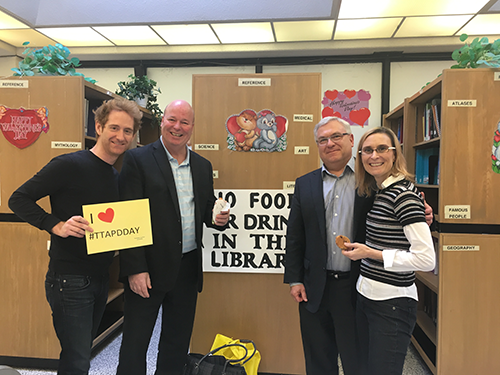
All of us at Creditaid were very happy to welcome Dan and Leslie Michaels from local radio station Jewel 100.5 FM to our office this past Wednesday. We always love to have visitors, and even more so when they come bearing coffee and doughnuts!

Our staff was very happy to be this week’s winner of Jewel 100.5 FM’s “The Office Tour Contest“. With coffee, doughnuts, good conversation, and lots of laughter, we think Dan & Leslie might have wanted to stay all day! They described their experience in the following day’s broadcast, click below to listen:

Thanks to Jewel 100.5 FM for sending over such great company and tasty treats, it made our week! If you’re looking to brighten up your work week, enter their contest, because you never know when it will happen to you.

And if you’re looking for help to manage your debt, rebuild your credit, or just find some financial clarity in your life, call Creditaid today – we can help.

A Habitat for Humanity Home Gives Families a New Start

Creditaid is proud to support various community initiatives and has been an important supplier to Habitat for Humanity Manitoba in their support of low income working families for many years.

As credit counsellors, we have the skills and experience to aid this wonderful charity by providing budget strategies to new Habitat homeowners to help them prepare for home ownership and budget effectively for a lifetime of financial success.

The financial education they receive helps to instill a sense of accountability and pride in their new home ownership status.

We are happy to be part of the Habitat for Humanity family, and seeing videos like this one makes us even bigger fans!

Tell Your Money Where to Go

Most people avoid developing a spending plan. It’s just no fun hearing the same things over and over – “be frugal, be thrifty, save every penny you can for a rainy day.”

Unfortunately, failure to develop a spending plan usually results in our money waving goodbye every payday, and when bumps in the road occur and they will, (life being, well, life) you find yourself with very difficult financial challenges.

There’s got to be a happy medium – something between the regimented, enforced frugality that is so often presented as the solution to your life’s financial future and the carefree spending that’s going to land you in trouble. Taking control means that you take back full control and “tell your money where to go”!! No more letting it simply wave good-bye!

Save Money with a budget planEnter the Save-to-Spend concept, a system of budgeting that will have you future-proofing your money, while still allowing you to achieve the things you want, and even giving you some “mad money” for the things you didn’t know you wanted. It is really all about pre-planning by putting your short, medium and long term goals on paper. Once you have them, put down what the costs are for each of them. Then prioritize them and determine the length of time it will take you to save for each of them. A simple example is buying a new big screen television. If the cost is $1200 and you want to have it in one year, start putting $100 away each month for it. This is far different then the buy now pay later program where you forget to pay off the interest free loan and end up paying 30% interest back to the day it was delivered. This is an example of a change from that path of instant gratification to one of delayed gratification!

The concept goes one step further and includes the most important part of any plan and that is building your emergency savings account. These are just a few simple examples of a very old concept that we need to return to.

Of course, you can’t make money from nothing, so there are going to be some sacrifices. They will, however, seem unimportant as you quickly see your bank balances grow with all the individual financial goals you have set.

Just remember you need to keep happy while you work within your Save-to-Spend plan! Like dieting, if you tell yourself you can never enjoy one of the foods you love, you’ll likely cheat. If you allow yourself the occasional treat, you’ll be happier overall and are more likely to get the result you want. Save-to-Spend has been proven to be effective.

If you have questions about Save-to-Spend, budgeting, or any other topic related to debt or personal finance, contact Creditaid anytime online or by telephone at (204) 987-6890.

Online Survey Finds Half of Respondents are within $200 of Being Unable to Pay Bills

If you are struggling to make all of your payments or are already unable to make your required monthly payments, Creditaid can help. Whether you need to rebuild your credit, undergo credit counselling, tackle your credit card debt, reassess your finances following a divorce or a move, or any other challenge that life brings – we’ve seen it all and we have a program that will suit your needs.

Reposted from the Winnipeg Free Press online edition February 16, 2016.

CALGARY – A new poll suggests nearly half of Canadians surveyed last month are within $200 per month of being unable to pay for their bills and make their debt payments.

The Ipsos Reid survey also found about one-quarter of the 1,582 people who responded to the poll were already unable to cover their bills and debt payments.

The online poll was done between Jan. 27 and Jan. 29 for MNP Debt, which provides licensed trustee services in six provinces, from Quebec to British Columbia.

MNP says the poll found that 31 per cent of respondents said any increase in interest rates could move them towards bankruptcy.

Ipsos Reid conducted the poll about a week after the Parliamentary Budget Office issued a report on Jan. 19 that said Canada has seen the largest increase in household debt relative to income of any G7 country since 2000.

The survey also followed Bank of Canada’s decision to keep a key lending rate at a historically low level of 0.5 per cent on Jan. 20, as the central bank lowered economic growth estimates for 2015 and 2016.

The polling industry’s professional body, the Marketing Research and Intelligence Association, says online surveys cannot be assigned a margin of error as they are not a random sample and therefore are not necessarily representative of the whole population.

Talking Financial Wellness at R.D. Parker Collegiate

Thompson-Mb-Balance-Wellness-Feb-10-2016

Wednesday, February 10, 2016, marked another great day of professional development, this time with the staff from R.D. Parker Collegiate in Thompson, Manitoba. Our Balance Wellness Team is having a lot of fun meeting some great teachers across the province.

We were welcomed with open arms by Principal Rod Fisher and his staff. Keith Macpherson, Carla D’Andreamatteo, and Creditaid’s President Brian Denysuik, are really enjoying the opportunity to deliver some great programs. Creditaid’s Financial Wellness piece generated lots of interesting conversation.

Thank you Manitoba Teachers’ Society for having Creditaid as part of the Balance Wellness Program.

Identity Theft – A Growing Threat

online-identity-theft

Imagine that, one day out of the blue, collection calls started. Your mailbox filled with overdue notices. People threatened legal proceedings against you. All for debts that were incurred in your name, but you knew nothing about.

This nightmare scenario plays out far more often than you might think. RCMP statistics show more than 12,000 cases of identity theft annually in Canada. This theft results in more than 10 million dollars in losses for individuals, businesses, and insurance companies.

While identity theft crimes have been with us for decades, the technology that is being used to make our transactions more secure can make us a target, too. The two biggest tools of the identity thief are the telephone and the computer.

Telephone fraud has increased recently, due to the ability to “spoof” telephone numbers, which can make the source of the call any number the caller wants, rendering Caller ID equipment useless. Today’s widespread internet-based phone technology means that calls can originate anywhere in the world. Often the caller will pose as a bank, or even a well-known computer company, and they will troll for unsuspecting people to provide them personal information.

The vast majority of Canadian households have a computer, which has opened a whole new avenue for criminals searching for information. They can mine users via email, through official-looking webpages, or through software that’s designed to infiltrate the computer, looking for personal information. Keylogger programs can even be used to send your every keystroke to a criminal.

How to Avoid Identity Theft
Never divulge personal information if there’s the least bit of doubt about the person with whom you are communicating. Make sure that you originated the call, and it’s to a known business.

Never provide personal information, including credit card numbers, in an email.

When using a website for e-commerce, make sure it’s secure – you should see a padlock in the browser’s address bar, and the address should begin with https://. Always double check to ensure that you’re visiting the correct website.

Keep your antivirus and antimalware software up to date.

If you have questions about credit, or have found yourself in some trouble, contact Creditaid anytime online or by telephone at (204) 987-6890.

Credit Score 101 – A Refresher Course

We all know that we need to be careful with credit – because it’s easy to borrow money, and wind up owing as much, or more than we can pay. We all know what it feels like when there’s “too much month left at the end of the money”.

And there’s this vague fear of a negative impact on our credit history that can affect us in the future. The more we know about credit reporting, the more we can work to improve the way potential lenders see us, and then we can leverage a good report to get favourable terms when we borrow money.

What is a Credit Score?
In Canada, a credit score is assigned by one of the two large credit reporting agencies – Equifax or TransUnion. The score is a number between 300 and 900 (900 being perfect) that represents Credit-Report-illustrationthe aggregate of all of the information that the bureau has on file about us. Most interactions that you have with lenders, either positive (payments made on time) or negative (late payments, collections, bankruptcy) will affect our score. Anyone who has ever accessed any form of credit has a file with the credit bureaus. Potential lenders use your credit score, with your permission, to determine whether or not you qualify for credit, and sometimes they use it to set the terms of borrowing (interest rates, etc.).

Who Can Access My Credit Report?
Any lender can provide information about your loan, payments, etc. to the credit bureaus. You give them permission to do so in the agreement you sign when you begin to access credit with them. Any potential lender with your permission (usually in the application) can access your report and score. You can (and should) access your own credit report with both bureaus. Make sure that all of the information that they have on file is accurate.

By knowing your own credit score, you can demonstrate to potential lenders that you are a responsible borrower. You may be able to negotiate more favourable terms as a result.

If you’ve got questions about credit, or have found yourself in some trouble, contact Creditaid anytime online or by telephone at (204) 987-6890 or (877) 900-2659. We can help you take those important first steps toward a debt free life.

Creditaid is Going Back to School!

Balance Wellness program logoCreditaid is delighted to be part of a new wellness program offered to the members of the Manitoba Teachers’ Society. The program, coined Balance, is in its’ first year and Creditaid is very excited to be covering the Financial Literacy piece.

Financial wellbeing impacts one’s overall health, and can affect relationships with family, friends and co-workers. More employers are beginning to realize that being under financial stress can significantly impact the quality of an employee’s daily work. We were happy to be selected by the Manitoba Teachers’ Society as responsible for the Financial Literacy portion of their wellness program.

The Financial Literacy workshops and resources provide information to help individuals deal with financial stress and limit the effects it may have on their life. Topics include but are not limited to:

• Identity Theft
• Dealing with Financial Stress
• Budgeting Made Easy
• Talking Money with Your Kids

We have been helping Manitobans be debt free since 1992 and with programs like these, we can help even more. These valued individuals are teaching our children, and we trust that the more knowledge they have, the more they will pass along.

1 in 5 Manitobans Feel Little Control Over Their Financial Situation: Manitoba Financial Literacy Forum Survey

Creditaid is a proud participating member of the Manitoba Financial Literacy Forum, currently comprised of more than 40 active members. The following news release and Executive Summary of the survey can also be found on their website.

Winnipeg, Manitoba (November 19, 2015) – One in five Manitobans say that there is little they can do to control their financial situation, according to a new survey from the Manitoba Financial Literacy Forum.

The survey, conducted by Prairie Research Associates, also revealed:

• 15 per cent of Manitobans believe that they would put off dealing with their money problems
• 11 per cent say they do not know who or where to turn to solve a financial problem
• 8 per cent feel that they do not know how to make good financial decisions

The results indicated that half of Manitobans do not consider themselves to be fully confident in their financial behavior, with many people desiring access to information and tools that can help them understand their finances, track their spending, create household budgets and improve their ability to work with a financial professional.

These findings are being used by the Manitoba Financial Literacy Forum to create a benchmark for the current state of financial literacy in the province. This is the first survey of its kind to focus exclusively on Manitoba, and its results will inform the Forum’s future programming and projects.

“Learning how Manitobans understand their own financial situation and behavior is an important first step for the Forum,” says Cynthia Duncan, co-chair of the Manitoba Financial Literacy Forum. “We’re finding that many people want to improve their financial skills, and we’re committed to connecting them to the resources that can set them up for lifelong success.”

Manitobans can learn more about money management by visiting ManitobaFinancialLiteracy.com. The website, operated by the Manitoba Financial Literacy Forum, maintains a large collection of free tools and information to help guide people toward making responsible financial decisions at every stage of their lives.

The Manitoba Financial Literacy Forum is one of the province’s largest not-for-profit coalitions of organizations and individuals working to promote financial education and skills to Manitobans, represented by stakeholders from the public, private, financial services, credit counselling, and voluntary sectors, as well as individuals, and families and labour organizations.

The survey results cited are compiled from a random sample of 600 Manitobans 18 years of age and over between April 9 to 29, 2015. The results were weighted to better reflect the population. A probability sample of this size would yield results accurate to ± 4.1%, 19 times out of 20.

Media Contact Information:
Cynthia Duncan
Co-chair, Manitoba Financial Literacy Forum
204-925-7420, ext 7405
info@manitobafinancialliteracy.com