Habitat for Humanity Winnipeg was incorporated in 1987 with the vision of helping to eliminate poverty housing in Winnipeg. Today, by mobilizing volunteers and community partners like Creditaid, Habitat for Humanity Manitoba works with people from all walks of life to build safe, decent, affordable housing for purchase by low-income working families.
At Creditaid, we have the expertise to support this wonderful charity by providing budget strategies to new Habitat homeowners that will help them prepare for home ownership. Our services are provided to approximately 25 Habitat families per year throughout the province of Manitoba. The financial education they receive helps to instill a sense of accountability and pride in their new home ownership status.
The meetings between Creditaid and the new home owners are private and confidential, and are also a mandatory requirement of all new Habitat families. The families use the advice and guidance provided by Creditaid in all aspects of their lives – not only those related to home ownership. The families are left with the skills necessary to budget effectively and manage their debt responsibly for a lifetime.
We are happy to be part of the Habitat for Humanity family and hope to continue helping Habitat families long into the future.
Republished from the Winnipeg Free Press print edition June 6, 2015 B13
Hoyt and Summer knew home ownership wouldn’t be easy. After all, the former Money Makeover participants were told as much by a financial counsellor their first time around.
Phil Hossack / Winnipeg Free Press
In 2012, they graduated from university and were interested in jumping into the condominium market. Both having landed full-time jobs with good pensions, they believed home ownership would help them get ahead.
“We had been renting about five years,” said Hoyt, a civil servant in his early 30s. “We had a lot of debt, so we thought we could buy a condo, live there a few years, and after selling it, we could hopefully find some way to alleviate the debt we had.”
“Boy, were we wrong,” said Summer, an administrative worker in her late 20s.
At the time, the couple had about $21,000 in debt, largely the result of earning university degrees.
They did have some savings — about $17,000, including $11,000 from their parents for a down payment. Moreover, they had steady income, earning a combined $75,000 before taxes a year. Eventually, they purchased a renovated two-bedroom condo for about $187,000.
It didn’t take long before they realized it was more than they could handle.
“The debt just kept ballooning because we couldn’t keep up with the mortgage payments, the condo fees and everything else that comes along with it,” Hoyt said.
The expenses that hurt the most were large, unanticipated repairs: a sewer backup, burst water pipes and a leaky roof — to name a few. Soon their reserve fund was empty and they were paying out of pocket.
“We had rose-coloured glasses on and seeing what friends were doing with their lives, we thought ‘this is something we should be doing, too’ not realizing we were not financially in a place to do it,” Summer said.
So late last year, they sold at a $20,000 loss and were relieved to be renting again. Now Summer and Hoyt owe about $42,000, including a $6,000 no-interest loan from their parents, and they have almost no savings.
Still, they have hope.
They earn more than before: more than $90,000 combined a year. And they are determined to get out of debt as soon as possible, particularly since they want to return to school so they can upgrade their career options and earn more money so they can become homeowners again.
“We are really a cautionary tale for others like us thinking of doing the same thing,” she said.
He said many first-time buyers find themselves in financial trouble because — like Summer and Hoyt — they underestimate or even overlook the costs of ownership, particularly with respect to condominiums.
“The repairs and the (loss of the) reserve fund frightened them so understandably they decided to cut their losses.”
Now, Hoyt and Summer must become debt-free to move forward. Yet while they have been trying to track expenses and make regular debt payments far above the minimum requirements, Denysuik said they will have to bear down on the budgeting process to make meaningful progress.
“I asked them if they are working from a spending plan and tracking their expenses and the answer was ‘we have a hard time keeping up after a week or so.’ ”
But if they were tracking costs, they would realize they have more free cash flow than they think.
“Three years ago, they had a combined gross income of $75,000, but today they have a combined gross income of $94,446, an increase of 26 per cent,” he said, adding their take-home pay has increased to $4,640 from $4,088 a month.
While their debt has doubled, they do have the cash flow to pay it down faster than their current pace.
In 2012, their discretionary spending was $850 a month when they were advised to cut costs if they decided to buy a home.
Today, they’re spending more than $950 a month on entertainment, coffee, clothing and dining out even though they are focused more on debt reduction than they were before.
“At this point, even if they earned an extra $20,000 a year without changing their habits, they will just keep spending more.”
The upside here is they make enough money to become debt-free in less than five years without taking more drastic measures such as a consumer proposal or bankruptcy. But they must become dedicated budgeters to make it happen.
Hoyt and Summer have to closely track their expenses to understand their true cost of living. This is the only way to find where they can cut spending to increase cash available for debt payments while building up emergency savings so they’re not forced to go back into debt when things go sideways.
Already, they’ve done some good work, paying more than $1,000 a month on debt while saving $165 a month for emergencies. Still, they could do better because about $466 a month of income is unaccounted for in the budget.
Moreover, they could increase the effectiveness of their efforts using the ‘avalanche method’ of debt repayment — something Summer is already doing. This involves paying the minimum amount on the lowest interest debts while making the largest payments against the highest interest debts.
“In this respect, Hoyt should look at reducing his line-of-credit payments — at seven per cent — from $300 a month to $100 and increase payments on his credit card payment — at 20 per cent — to $400 a month from $200,” Denysuik said.
“This way they can have their unsecured debt paid off in 40 months with another five months to repay parents.”
Yet with a few more tweaks, they could be out of debt even faster.
“If they reduced their discretionary spending by $400 a month, increasing emergency savings from $160 to $200 and pushing $300 more to debt repayment, they can be out of debt in 30 months,” he said.
Another benefit of this strategy is their cash flow would increase to more than $500 a month from $466 a month simply because their money is being managed more efficiently. This extra cash could be used to save for a home, tuition or pay debt faster.
“All of this is dependent on monthly tracking of expenses and making adjustments,” he said.”That means keeping all receipts and once a month sitting down together and sorting the bills and adding up each category.”
And it need not be a grim task either, he said.
“Make it a date night at home where you cook supper, have a little wine and summarize the tracking and compare it to plan.”
— — — Summer and Hoyt’s finances:
INCOME:
Summer: $49,500 ($2,340 net a month)
Hoyt: $43,900 ($2,300 net a month)
MONTHLY EXPENSES: $4,173 DEBTS:
Summer line of credit: $15,000 at 3.5 per cent
Hoyt line of credit: $10,500 at 7 per cent
Summer credit card: $7,070 at 19.99 per cent
Hoyt credit card: $4,300 at 19.99 per cent
Loan from parents: $6,000 ASSETS:
Summer TFSA: $90
Hoyt RRSP: $1,300
Savings: $800 NET WORTH: – 40,680
Vacations are a highly anticipated part of everyone’s life, so working to minimize setbacks and disappointments now can help to ensure that you have the carefree and relaxing vacation that you so deserve.
Planning ahead will allow you to take full advantage of a year’s worth of opportunities to save and – if required – earn more money to fund all of the activities you wish to do while on vacation.
Good question. Certainly, not everyone has, but spiraling levels of consumer debt have risen to record levels, indicating that Canadians are spending more money that they don’t have at an alarming rate.
Statistics Canada has released figures for the third quarter of 2014 indicating that Canadian household total credit-market debt, which consists of mortgages, consumer credit (mostly credit cards) and non-mortgage loans rose to 162.6 percent of disposable income. The Bank of Canada has stated that “high consumer debt loads and imbalances in the housing market” are a concern.
In short, people are using credit more today than ever before.
Two generations ago, very few people used credit. Society was based on a “cash on the barrelhead” philosophy that encouraged living within one’s means. This standpoint has been slowly eroded by rising home ownership costs (it is virtually impossible to purchase a home without a mortgage, and the length of time that the average family spends paying for their home gets steadily longer), the availability of consumer credit, and the replacement of “hard” currency with cheques, credit cards, and digital wallets.
It’s easier to access credit today than ever before, and advertising inundates us with constant messages promoting consumption of high-value items, usually on payments. It’s no wonder that people wind up in trouble with credit cards, loans, and lines of credit.
Well, in 21st Century Canada, it might seem that way. Canadians owe a greater portion of their earnings to creditors today than ever before, and even with low interest rates are making steep payments every month just to maintain their debts. When seemingly everyone owes money, how do you know it’s time to see a credit counsellor?
First and foremost, if you don’t know your financial situation, you need to see a counsellor. It’s often easier to hide your head in the sand when it comes to debt problems, but it’s certainly not a long-term solution. If you’re ignoring a debt problem, it’s getting worse.
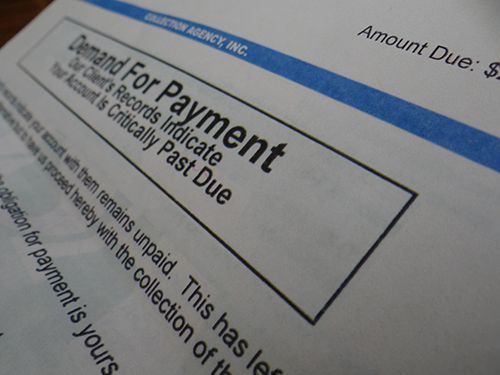
If one or more of your debts has progressed to collections, and you aren’t able to make the payment, you have a debt problem.
If you’re not able to save for emergencies, or put money away for retirement, you could benefit from credit counselling.
If you aren’t able to sleep comfortably at night, secure in the knowledge that your household spending is under control and you have a plan to pay your overall debt load, then you need to contact Creditaid.
Creditaid is a licensed and bonded credit counselling agency that has been proudly serving Winnipeg since 1992. If any of the above scenarios apply to your life, contact us today for a free appointment with a credit counsellor, to help you take stock of your situation and access some of the many tools at our disposal to help you on your journey to financial security.
Credit counselling in and of itself is confidential, and will have no effect on your credit score.
Some of the actions that you might take on the advice of a credit counselor could affect it negatively, but chances are, if you’re in the market for credit counselling, your credit score already exhibits some problems.
At Creditaid, we understand that the initial effort required to come in for counselling is immense. While we offer a judgment-free environment, we know the pressure that the credit industry puts on people to maintain a good “score”. Banks and credit card companies talk about it like it’s a measure of a person’s value. We know it’s not – it’s just a tool that lenders use to evaluate the level of risk that an individual exposes them to when they lend them money.
Many of our clients access one or more of the debt relief tools we have at our disposal. A Debt Consolidation or Debt Management Program will be reflected on your Credit Bureau report, and can affect your credit score negatively, both while the program is in place and for a time afterward. Since both require you to forego obtaining new credit while enrolled, this won’t be an issue until after the program is complete, and you are out of debt.
You will be surprised at the number of lenders who will still be willing to issue credit, even with a lower score. You will also have new tools, knowledge, and insight, so you’ll likely resist their tempting offers of easy money.
Creditaid has partnered with Home Trust, a federally regulated trust company that has been specializing in helping Canadians find alternative financial solutions for over 35 years. We can help you rebuild your credit with a Secured Visa card.
We have also partnered with Keystone Finance, a local financial solutions provider that has helped clients and their families live better lives for over 30 years.
If you’re finding that there’s not enough money to meet your monthly debt load, and fear that it’s spiraling out of control, contact Creditaid today. For anyone who’s ever experienced credit trouble, there’s no better feeling than being debt free.
The Smart Biz March 2015 edition is out, and in it, Brian Denysuik talks about the importance of teaching our children the basics of money.
How often is actual money, as in cash, used in your daily life? This is what children see every day; the concept of money has been reduced to plastic cards that seemingly act as a “get out of the store free” pass in the eyes of a child who may have never seen anything beyond Monopoly money.
To read more about how to open the discussion with your children and starting their financial education sooner rather than later, check out the full article on page 13 of the March Smart Biz.
If you need to expand upon your own financial knowledge, or just need somebody to talk to about your finances and debt load, contact the caring folks at Creditaid for your free, no obligation assessment.
You need only to look at the recent demise of the penny, or see the “wave your card here” payment option at the supermarket to know that the way that we think of and use money is changing.
In ancient times, humans would barter objects or labour directly. A farmer might give his neighbour two chickens in exchange for a bag of flour, or might help build a fence and be rewarded with a sack of carrots.
At its core level, money is a substitute for human labour or resources, traded to someone in exchange for “payment”. This payment can then be used to obtain the things you need or want from a third party, not related to the first.
In the past we used gold and other precious metals to represent the value of our labour and goods, but switched to a system of currency consisting of minted coins and printed paper. In the 20th century, cheques and bank drafts simplified purchasing, and in the 1950s, credit cards were invented, to allow us to access money we hadn’t yet earned, in exchange for a “borrowing fee”.
Today, money exists in a number of forms. We still have “hard currency”, or cash, but its use is on the decline. The digital revolution has brought us more options. As more and more purchases are being made at a distance, instant transfer of money via credit cards and money transfer services have become part of the landscape.
At the end of the day, no matter how you spend your money, simple rules of budgeting must apply to keep your finances in balance. With so many ways to spend money that don’t involve any kind of currency, it’s easy to forget to budget. This is one of the ways that people wind up in financial trouble.
If you find your credit card and loan payments are making it hard to budget your money, contact Creditaid for a confidential assessment of your financial situation. We have tools that can help!
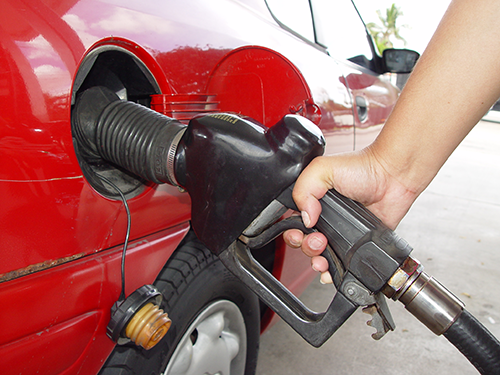
According to National Resources Canada, the average vehicle in Manitoba travels 14,963 km per year, and for every 100 of those kilometers it travels, it consumes 11.2 litres of gasoline.
Today’s gas price (about 88 cents per litre as of this writing) is far lower than the 2014 high in Winnipeg – $1.33 per litre in June of 2014. At this rate, the average driver is saving about $755 this year, if gas prices stay about the same.
What are you going to do with the money you save?
You could go on a short vacation, or buy a nice toy. Or sock it away for a rainy day. Most people, however, will just absorb the money in to their daily expenditures, and not really notice that it’s there. An extra cup of coffee every day.
At Creditaid, we’ve got a different idea. Knowing how many people struggle with credit card debt, we’d suggest using your windfall from lower gas prices to help reduce the credit card, loan, or line of credit with the least favourable interest terms. You’ll then be putting the money you’re saving on fuel to its best possible use – bettering your financial position now and in the future.
We’ve helped many of our Winnipeg neighbours with customized solutions to eliminate their debt, including debt consolidation and debt management programs. We will help you with your current financial crisis, and give you the tools you need to ensure that you don’t have a recurrence in the future.
Creditaid is very proud to have formed a relationship with Smart Biz Winnipeg for 2015.
Smart Biz is a monthly publication that aims to connect people with information about different educational paths and career streams. Smart Biz works with the Winnipeg Chamber of Commerce, the Assiniboia Chamber of Commerce, and the Downtown Winnipeg Biz, in order to present perspectives from within the workforce. Every issue also features lifestyle columns on health, money, gaming, personal life and fashion.
Brian Denysuik will be publishing articles to appear in Smart Biz throughout the coming year, offering advice on everything from the new rules of cohabitation to the basics of creating a budget.
You can access the January edition here or by clicking on the image in this post. Brian’s first article in the series appears on page 15.
Be sure to visit the Smart Biz website and click the “Follow” button in the bottom right corner to keep up with all of the updates!



 At Creditaid, we have the expertise to support this wonderful charity by providing budget strategies to new Habitat homeowners that will help them prepare for home ownership. Our services are provided to approximately 25 Habitat families per year throughout the province of Manitoba. The financial education they receive helps to instill a sense of accountability and pride in their new home ownership status.