

Collection Agencies – Know Your Rights

When you are behind in paying a debt, creditors may turn your account over to a collection agency in an attempt to recover the amount owed. Whatever the situation is that landed an account in the hands of a collection agency, there are certain rules that they must abide by. It is important to know your rights when dealing with collection agencies.

– Written notification. The collection agency must notify you in writing that they have assumed your account. If you are receiving phone calls from an agency that has not sent you written notification, ask for this to be sent to assure that it is not a fraudulent action.
– Only pay what you owe. Collection agencies are not allowed to collect more than the amount owed in Canada. Their fee is taken out of the amount owed to your creditor so no additional fees should be added on top of what your originally owed the creditor.
– No harassment. While collection agencies are allowed to contact you to collect the debt, they are not allowed to harass you or your family. There are also certain times of day that are restricted from collection attempts, check with the rules within your province or territory.
– Contacting others to collect your debt. Collection agencies are not allowed to contact your friends, neighbors, family or any outsider to try and get information besides phone number or address to collect your debt.
– Legal action. You must be notified before a collection agency can begin attempting to collect the debt through legal or court action.

If you owe the debt, it is always best to pay it in full as soon as possible or make arrangements with the collection agency to do so. However, if you feel they are using illegal or unjust means to try and collect money from you, contact your provincial or territorial consumer affairs office and report the agencies actions.


Debt and Divorce – How to Deal with it

Divorce is never easy, especially when it comes to splitting up assets and debts. In most cases, the married parties must agree on how to divide the martial belongings, both what is owned and what is owed. While assets are easily divided, debt is a little more tricky. Most martial debt that is in both of the couple’s names can affect both people for as long as the debt exists, regardless who the divorce papers say is in charge of paying it back. Before filing for divorce, couples should take in to consideration how it will affect their debt and credit situation.

Divorce decrees are not recognized by most lenders. If a marital debt is in both names of the couple, then it is still considered owed by both regardless of what the divorce court or papers have declared. For example, if the couple bought a boat together and the wife is awarded the boat and the loan that goes with it, the husband is still responsible if the payments are not made. Unless the wife is able and willing to refinance the boat in only her name, the husbands is still expected to make the payments if she does not.

Since many marital loans and debts may take years or even decades to pay off, as long as they exist, the couple is still tied to each other. One way to handle this is to separate debts into one or the others name only before the divorce. Another is to pay off the debts together before the divorce. For large ticket debts like homes or vehicles, it may be best to sell the property versus having one person take over the payments while the other person’s name is still attached to the debt. By dealing with the debt issue ahead of time, both people can go their separate ways without having a financial tie for years to come.

Secured Debt vs Unsecured Debt – What’s The Difference?


When consumers buy on credit, there are two main types of debt that they can incur: secured and unsecured. The difference is fairly simple, yet they can be treated very differently in many ways. In basic terms, a secured debt has collateral that can be taken if the debt is not repaid. Unsecured debt is not attached to any tangible collateral, only the promise of repayment by the debtor. Because of this main difference, these two types of debt usually have different interest rates and consequences when they are not repaid.

Secured Debt
Most secured debt is for large purchases or investments. In these cases the loan is borrowed to buy a large purchase, such as a house, vehicle or boat. Because the loan is secured, interest rates are generally lower than unsecured credit. The item purchased is put as collateral with the stipulation that if the loan is not paid as agreed, the lending institution has the right to repossess the item. Another way secured debt is incurred is for cash loans. A person may use an item such as a home or vehicle as collateral to receive monies for personal reasons. Whatever is used as collateral is then subject to possible repossession if the loan is not repaid or if the person files bankruptcy.

Unsecured Debt
The most common types of unsecured debts are credit cards or signature loans. In both cases, credit is given based on the promise of the debtor to repay. While not repaying the debt will negatively affect the persons credit worthiness and score, usually the lender has no alternatives beyond reporting the unpaid debt to credit agencies. Due to this, unsecured credit and loans are generally at higher interest rates since they are a higher risk for the lenders. If the person files bankruptcy or does not pay, the debt is usually a complete loss for the lender.

Work with St. Amant Important to Creditaid

When you live in a community as great as Winnipeg, you don’t have to look far for support of community efforts.

Look all around you to see evidence of how companies in our city are helping improve the lives of our fellow Manitobans, especially those who depend on organizations for vital care.

At Creditaid, we take pride in the assistance we provide to Manitobans. This is not only part of our credo as an organization, but extends to our volunteer efforts in the greater Winnipeg community. As such, we have been extremely supportive of St. Amant. A comprehensive resource for Manitobans with developmental disabilities, and autism, We believe strongly in the work St. Amant does, which includes a large residence for complex-care, 50 community sites and homes, the St.Amant Research Centre, the St. Amant School and River Road Child Care.

On Saturday, September 21, Creditaid will be taking part in St. Amant’s Free the Spirit Festival, 10am to 2pm at the John and Bonnie Buhler Reflective Gardens, and our President, Brian Denysuik, will be participating in the Fundraising Walk, benefiting the life-changing studies conducted by the St. Amant Research Centre. In addition to the walk, the day will be highlighted by games, music, snacks and prizes for the entire family.

If you would like to join us – or sponsor Brian – click here for full information.

Money Savvy Teens – Share A Book To Help Them Learn The Basics


Learning how to manage money is part of growing up and a real skill that a teenager needs as they transition into adulthood. Unfortunately there are many bad influences out there, maybe even within your own extended family, which may be giving them the wrong messages. Teenagers often do not listen as well as they should to their parents on certain subjects, and it can be helpful to have an outside resource to reinforce good money management principles.

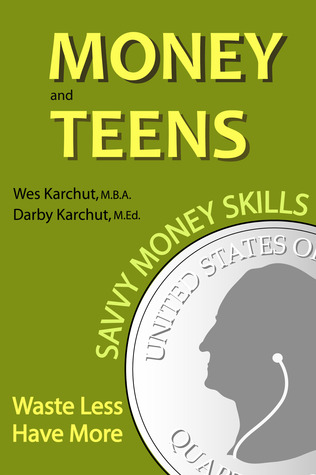
Money and Teens
The book Money and Teens by Wes Karchut and Darby Karchut is a great way to give your teenagers some useful financial wisdom without it coming across as a lecture from their parents. The book is written to include everything from opening bank accounts to how credit works and is a great reference, even for those who are well past the teenage years. Some money tips that are covered in the book include:

– How to check and read your credit report
– How missing a payment affects your credit
– Checking accounts and writing checks
– Protecting your financial security, i.e. PINs and login information
– How grocery and retail stores use tactics to get you to spend more
– A self-quiz to take when deciding whether you should buy something

The book is a basic guide to everything that you need to know about saving and spending money wisely. Many people in their twenties, thirties and, even, beyond may learn something they did not know from this book.

As parents, it is your job to try and give your children the skills they need to succeed. A big part of being an independent adult is learning to handle money wisely. Sharing a book like Money and Teens is a good way to solidify the lessons that you have been teaching them all along. It can be a useful guide for them to turn to as they begin to face financial challenges on their own.

Explaining Savings Versus Spending To Your Kids

Teaching your kids good money habits is not easy. It is not a one-time tutorial, but instead an ongoing process of setting good examples, explaining money concepts and letting them learn by trial and error. However, it is an important lesson that is best learned from their parents. Teaching them the value of saving versus spending is the first step.

Learning The Value Of Saving
As frustrating as it may be to a young child not to get what they want, when they want it, it can also be rewarding. Most children learn the basics of saving through getting an allowance or payment for chores around the house and using that money to buy the things they want. However, many parents easily give in to children who beg and plead for a new toy or treat instead of teaching them the valuable lesson of how to save.

Beyond teaching children how money works, which is done to some extent in school, the more important value that parents can impart to their children is the satisfaction that comes from earning rewards. If a child wants a particular toy, explain the cost and what they will need to do to earn that money and how long it will take. Do not give in to children who already understand the concept of credit and asks to have the treat or toy now and promises to do chores later to earn it. This is exactly what you do not want to teach them! Instead, allow them the satisfaction of working hard to save the money they need to purchase the reward. They will appreciate what they buy even more, and learn a valuable lesson.

Financial lessons are better learned earlier than later, when credit scores can haunt them for years to come. Give your children the tools to learn the value of saving versus spending from the very beginning, to prepare them to be independent and financially responsible.

Couponing – You Don’t Need To Be Extreme to Save Money


There are many books, TV shows and online websites dedicated to showing how extreme coupon use can save hundreds and even thousands of dollars. As impressive as these savings may be, they do require an amount of time and dedication that many families cannot or are not willing to give. However, there are ways to make the most of coupon savings without making it a full-time project.

Smart Shopping
There is more to saving substantial money on groceries using coupons than just clipping out the ones that are for products that a family currently needs. The true trick to saving large amounts of money throughout the year is to change the way that a family shops, incorporating coupons into the strategy. By buying items when they are priced the lowest and adding coupons to make the price even lower instead of only buying those same items when they run out, can be a huge money saver.

Prices on all items go up and down, based on many uncontrollable factors, including seasonal changes and corporate buying patterns. Extreme coupon users know this and save their coupons to combine with low prices. By doing this on all items whenever possible, a family may get a years worth of cereal or shampoo at a fraction of the cost of buying it only as they need it.

Look at the Big Picture
To make this possible, instead of only buying what is needed for the next week or two, the bigger picture needs to be looked at. Grocery lists need to be built around savings, stock piling on good coupon deals and doing less impulse buying on wants versus needs. Although it can take a while to get a surplus of items on hand, once this becomes a habit, it can save hundreds if not thousands of dollars a year.

The main idea is to use coupons to save money over the long run, not just on what a family needs today. Combining coupons with sales prices to stock up on everyday items is a way every family can save using coupons, even if they are not “extreme”.

6 Tips to Help You Get Back On Track

Whatever your financial life goals are, it often takes discipline, planning and a lot of hard work to achieve them. You need to know where your hard-earned money is going before you can make the necessary changes to your spending habits. Here are 6 steps to follow to help you get on track.

Summer Heat Wave – Tips to Lower Cooling Bills and Save Money

Hot weather can bring big utility bills throughout the summer as we try to stay cool, wreaking havoc on a family’s budget. However there are ways to keep cooling bills lower, while still maintaining a comfortable living environment. By using a few energy savings tips, there can be a substantial savings on your summer utility bills.

Ways To Save On Cooling
The first step is making sure everything is being done to reduce cooling costs. Maintaining and managing the cooling system is one good way to lower cooling bills. Air conditioners need regular maintenance to run efficiently. Having the unit serviced with a tune-up before the hot weather hits can reduce energy costs. In addition, using a programmable thermostat is a good way to save on daily energy use. Set it to allow the heat to rise slightly, no more than ten degrees, while the family is away each day and set it to begin cooling down again when everyone is due home.

Another way to save on cooling is to use Mother Nature. Investing in whole house fans that can draw in cool air at night through open windows can be a big money saver in humid climates. Another way to keep the home cool is to consider planting trees that offer shade on west facing areas of the house that get the most hot afternoon sun.

Protecting The Cool Air
On top of saving on cooling the home, there are large benefits to protecting the cool air from escaping. Windows and doors can both allow cool air out and let hot air in. Weather stripping around doors and windows is one way to keep in the cool air. Another energy saver is closing drapes and blinds to keep the hot sun from warming air inside the home.

By making just a few small changes in daily cooling routines, there can be a large difference in the energy consumed and the amount of cooling bills through the hot months.

Peace of Mind at Retirement

For those who are approaching retirement in the next few decades, the recent recession has changed many goals when it comes to retirement saving. While building a substantial savings for retirement through high earning investments was once the goal of many of baby boomers, a new value has been placed on the peace of mind that comes from stable, safe ways to ensure income for their retirement years.

Security Builds Peace Of Mind
The recession hit many hard, shrinking the size of their accumulated wealth and taking away the financial security that they thought was already theirs. This shock to the economy has made retirement investors more focused on keeping what they have, versus building a monumental retirement savings through higher risk investments. The change has lead to more baby boomers considering fixed rate annuities and other guaranteed investments that will protect their assets and slowly grow their retirement savings.

The quick reduction in investment values in the past decade has changed the entire mindset of those both young and old.For those approaching retirement age, there is no longer the illusion that money lost in high-risk investments can be quickly recouped. Protecting savings to ensure a steady and reliable income for retirement is more important to many than trying to grow nest eggs quickly for a more comfortable lifestyle. Younger generations have seen the backlash that has happened to their parents and grandparents, and many will proceed more cautiously when planning their own investments.

Although the lesson was financially painful for many, it was a valuable lesson to be learned for all investors. High-risk investments can be lucrative and have their place within an investment portfolio; however, the peace of mind that comes from having stability and security for retirement can be even more valuable.